- 848.932.7474
- info@rutgersalumni.org
Rutgers College '93
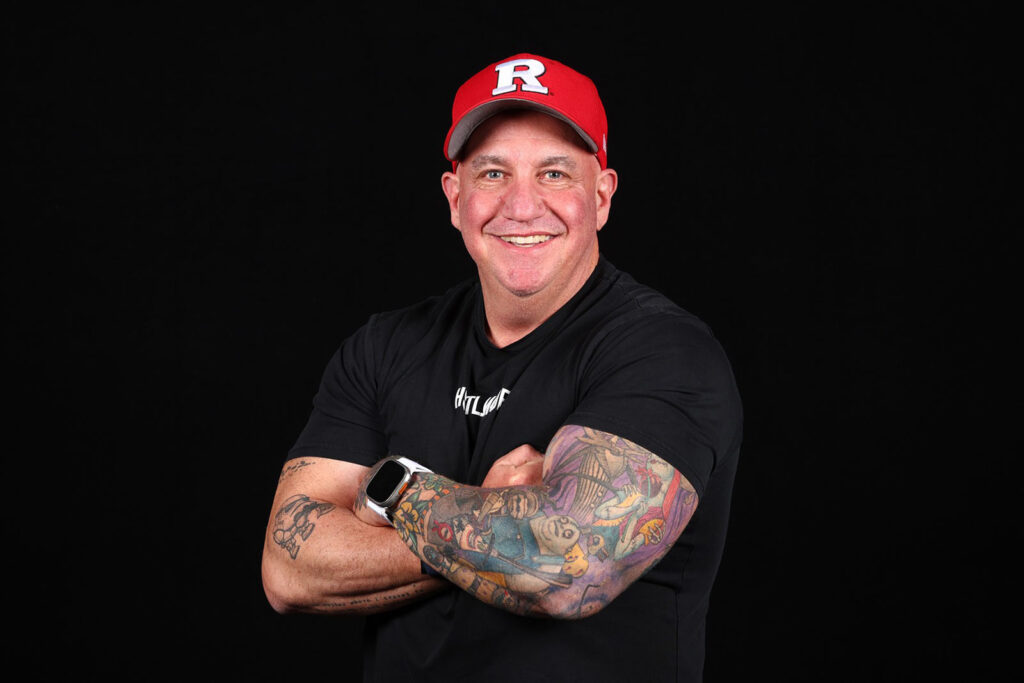
Ed Mulholland (RC’93) is a freelance photographer from New Jersey and is one of the most recognizable signposts of the Block R across the world for any fighting sports fan.
Ed’s work has been published in various publications/TV outlets such as FightNews.com, Sports Illustrated, ESPN the Magazine, Vibe, TV Guide, ESPN.com, NY Post, as well as many others. He has been awarded the Boxing Writer’s Photo of the Year eight separate times, and has also been inducted into the New Jersey Boxing Hall of Fame for his excellence in boxing photography.
See his content at: edmulholland.photoshelter.com, or @muls96 on Instagram
The following text has been edited for content and clarity; for the full interview see the video above.
Jordan Cohen: Ed Mulholland, thank you so much for joining us here as an Alumni Spotlight for the Rutgers Alumni Association. It’s absolutely a pleasure to speak with the Rutgers hat guy.
Ed Mulholland: Thanks for having me, man. Anything Rutgers-related, I am so excited to do.
So when did you graduate from Rutgers, and which school?
Rutgers College ‘93. I have a degree in economics.
And how long did you follow that career path?
Not long at all. So, it’s, it’s interesting. So, I actually had gone to Rutgers for engineering, decided it was not for me. I didn’t want to do it.
Nowadays, kids take gap years and everything else to figure out what they want to do.
We didn’t do that, so I went straight to college, and I thought I knew what I wanted to do, and had no clue of what I wanted to do, and sometimes feel I still don’t know what I want to do!
I was at the College of Engineering, decided I didn’t want to do that. It was a little bit late to try and transfer into the business school, so I went to economics, figuring I could get some business background going there, and I came out, and I went into, sales and marketing, for a pharmaceutical corporation. Photography was a hobby, and lo and behold, here I am now.
And, I’m not gonna say I don’t use my degree, because there is a lot of business that goes in, and negotiations and things like that, but, yeah, it changed.
Nobody ever expects where the degree will actually take them.
I look back at how I got here, and it’s just strange. Lucky and… and strange. Yeah.
How’d you end up at Rutgers to begin with?
Well, living in Jersey, I played lacrosse in high school. Rutgers lacrosse at the time was very, very good, so we would go watch games. I got to be on campus and see the campus, and I really liked it and I wanted to play lacrosse at Rutgers. I ended up playing for the club team at Rutgers, because while I was a good lacrosse player, I would have been a practice dummy for multiple years on the Division I team. I would have been an okay Division III player, but not a Division I player. So, I played club there, and got to play all the time, and be on the field, and had a great time doing it. That’s what piqued my interest, and at the time I was interested in engineering. It was a very good engineering school, so that’s what brought me into Rutgers. There were a couple other schools on my radar but Rutgers was always my number one.
My entire life was shaped by Rutgers. I met my wife there. My kids are a result of my wife and I meeting at Rutgers. It’s so much more than a degree.
You mentioned that the photography was a hobby. Were there any organizations or experiences which pushed you towards that?
No, it was literally just a hobby. It was something I liked. My dad had a camera, he would be taking pictures – we’re not talking like today, where everyone’s got a camera on them at all times because of their phones – this was film. But I just liked photography, and it was just a hobby, and I did multiple things at Rutgers, none of which involved photography.
I wasn’t at The Targum and taking pictures. It wasn’t even a thought, honestly. It was just something I enjoyed doing, but I never thought about it as a career, because I don’t think I even realized at the time it could be a career. Photography was never even in my radar, as far as being a career.
What else did you do at Rutgers?
A big part of my life was I was in a fraternity. I was a Sigma Phi Epsilon, I was Sig Ep. So I rushed my freshman year, and I lived in the house from there on out. I was very involved with the fraternity, and we did a lot of charity things, and, sports competitions, and stuff like that. Very, very big part of the Greek life and I will say that it changed me in a good way. Before, I was very quiet, pretty shy and now people can’t get me to shut up, but it was the fraternity that brought that out of me, and social life, and Greek life, and life at Rutgers in general.
Just getting involved and breaking out of my shell – that helped tremendously with my career. I’m freelance, I have a very good list of clients, but you have to be able to sell yourself. And that’s where going into business first actually probably helped my career.
You’re not the first person to bring up Greek life. When I spoke with Fran Rotella, an Emmy Award-winning broadcaster, she mentioned that when she was at Rutgers she was part of Alpha Chi Omega and it was a huge deal for her. It gave her a taste of that organizational, and networking side.
Yeah, I think it did the same for me. And I’ve made some of my best friends at Rutgers and at my fraternity. We still hang out, we have a whole Rutgers text group. I met my wife at Rutgers at one of our fraternity parties and she was in a sorority, she was in Delta Gamma. Liz and I met at a SIGEP party. And next year we’ll be married 30 years!
Congratulations!
Thank you. When people say, ‘Man, you represent the university, you’re always wearing a hat, you’re this or that, what was so great about Rutgers?’ And I fire back with, ‘My entire life was shaped by Rutgers. I met my wife there. My kids are a result of my wife and I meeting at Rutgers. It’s so much more than a degree.’
That’s fabulous; you said you went into business right after Rutgers?
Yes. I worked for pharmaceutical.
J&J?
No, I actually started with a small Medicare Part B company, and then they got purchased by a company called OmniCare, which was based out of Kentucky. I was doing sales and marketing for them. Doing that, suit and tie every day, no tattoos or anything – all very straight leg. But, I got to golf a lot, which is great. So, it just wasn’t really me. I’m more creative.
I liked the social aspect of things, and it was fine. It was a good job. I liked the people I was working with but, at the end of the day, I knew it wasn’t me.
I got this opportunity – really, I made the opportunity, I guess – while I was working that job. My brother had gotten tickets to a boxing match and I grew up a boxing fan; I’m a sports fan in general. I took my camera to the fight and I took some pictures. I used to follow boxing online and I sent the pictures to a boxing website called FightNews.com. Two weeks later, they called me up and said, ‘Hey, the photos look pretty good, would you ever consider shooting a fight for us?’ And I said, ‘Seriously? Ok!’ I guess that was my first introduction to, ‘People… people pay me for this? Okay, cool.’ So I was in Redding, Pennsylvania, it was a Don King-promoted show on Showtime.
I went down there, and I took some pictures, and they’re terrible, but I did the job, I got paid very, very, very little money. But I had a photo from the post-fight press conference where this Nicaraguan fighter had just won the World Title. And he came to the press conference, and here’s this peak of professional athlete, he has a World Championship belt around his waist, he’s just won, he’s got a Budweiser in one hand, and he lights a cigarette in the other hand. He’s smoking and drinking as he’s answering media questions, and I took this photo, and it ran in Sports Illustrated.
So, for my first assignment ever, I got my first photo in Sports Illustrated, which was crazy, and then I got paid, and I thought, ‘Wow, I could maybe make some money doing this, this is cool.’ I started hustling around on weekends in between my real job, doing some local boxing. I guess about… a year and a half, two years after that, I got a really big break, and it just ran from there.
What was the big break?
I got a random phone call on a Wednesday afternoon, I could’ve sworn it was a friend pranking me or something, but it was this woman, Jackie Norris, who was the photo editor at HBO. And she called me up, and she said, ‘We’ve been watching your work in Ring Magazine for the last couple years, we love your stuff. Our photographer can’t make a show in Atlantic City this weekend, we’d like to offer you a 3-month contract.’
So they gave me a 3-month contract. I ran down to Atlantic City that weekend, and I shot that fight, and then they flew me to Germany for a fight in Germany, and then they flew me to Vegas for an Oscar de la Hoya fight. And I ended up working for them for 3 months, meanwhile taking vacation time and leaves.
I went to my job, and I said, ‘I got this opportunity, and I’m not passing on it, can we work something out?’ And they said, ‘As long as your clients are happy, we don’t care what you do.’
So, I would just jam clients in, and service them by phone, and I’d fly somewhere, and I’d work 3 or 4 days somewhere else, and fly back home. I did that for 3 months, and at the end of 3 months, HBO said, ‘Yeah, we want to keep you.’ They gave me the Boxing After Dark series, and then it became too much, so it’s …’Do I want to do this? Or do I want to do my… career?’
And my wife Liz said, ‘You’re never around. I’m at work all day, and then I’m off somewhere else on the weekends. I’d rather see you happy, just make a choice. I think you should quit your job.’ And, I said, ‘Well, I have a job that pays me, and I have this that I’m starting out at.’
She says, ‘Look, you’re young, bet on yourself.’ I left my job, and started doing the HBO thing, which, they pay very well, but you only get paid when you’re working as a freelancer. And at the same time I got the HBO call, I won my first Boxing Writers Photo of the Year award and I got a call from Electronic Arts video game company.
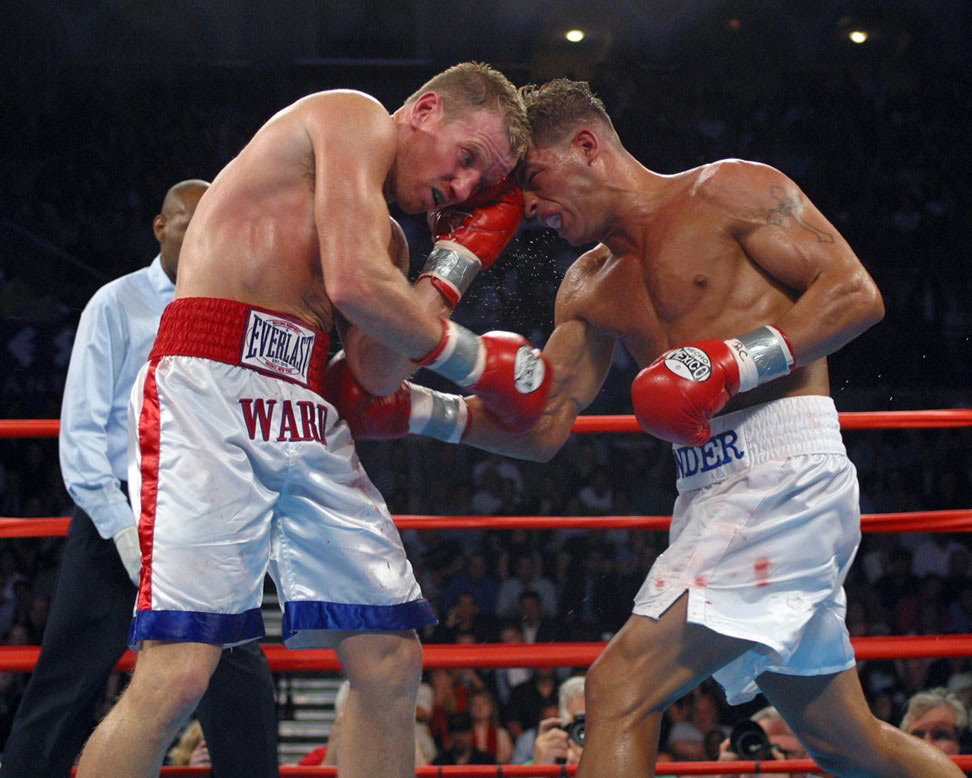
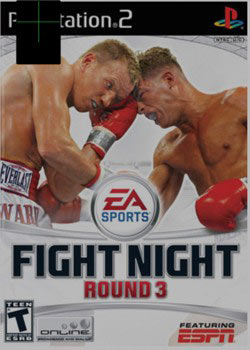
They had seen one of my photos, and they licensed it for a cover of a video game. I go from making a couple hundred dollars running to a little local fight to getting a five-figure payday for a single photo for a video game cover, and I think, ‘Wow, you can make some money at this, if you’re good.’ So then it was, I gotta become good. The more you’re doing something, and the more comfortable you get, you see different angles, and you try new stuff. But this all happened simultaneously. I left my job, committed to photography.
Two months after I did that, I got a call from ESPN. And they say, ‘Hey, we love your boxing stuff, we need someone to shoot some UFC, do you want to shoot some UFC stuff?’
So I started flying around for ESPN then, and it was literally one weekend I’d be with HBO in LA, and the next weekend I’d be in Mexico for ESPN, and it was great. It was crazy.
That’s how the whole thing developed, and then I got a call from USA Today, and I started shooting other sports, started shooting NHL and NFL and all kinds of stuff, and now I just shoot any sport I can shoot.
It’s wild, it’s a crazy story. It really is.
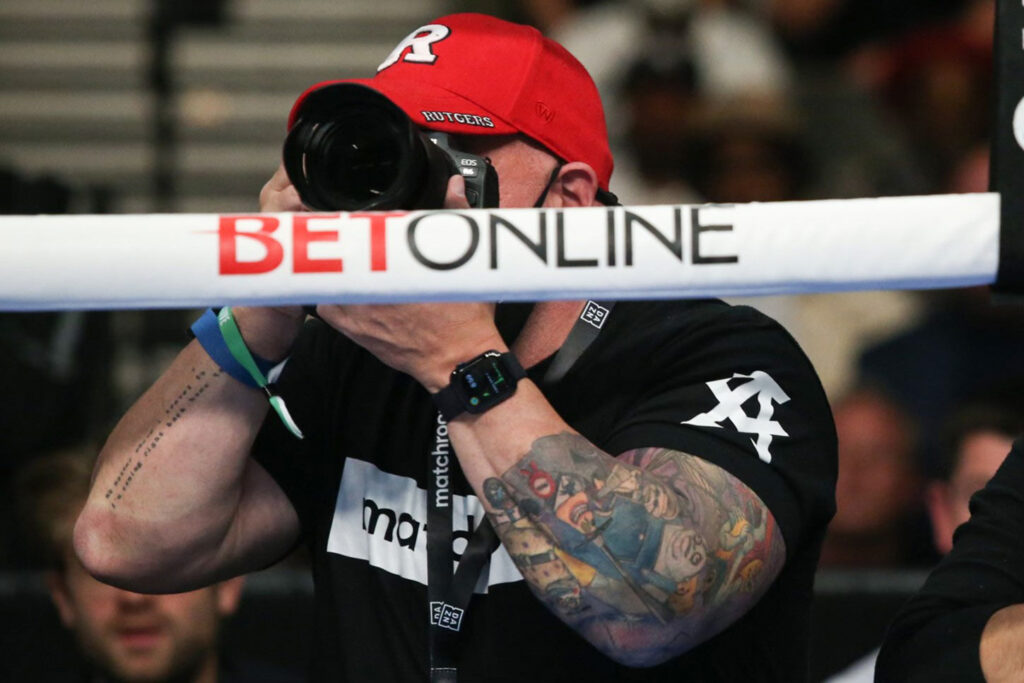
I have to ask, how did you get the signature of always wearing a Rutgers hat?
My second fight I ever covered was at Madison Square Garden, I’m ringside, and there was this guy, a really good friend of mine. He was a writer. He passed away a couple months ago. His name was Tom Gerbazi, and there was this woman there, Lisa Scott, one of them made a comment, ‘Man, you can always see the Rutgers hat, it just stands out ringside. You should wear it all the time.’ So they put that in my head. So I kept it… I just always wore it, and then it came where people I’ve known for years, if I don’t have the Rutgers hat on, they walk right past me. It’s almost that they don’t even recognize me. Especially if I’m at an awards dinner or something, I’m in a suit with no hat on, they literally just walk past me. I’ll say, ‘Hey, wait, we’ve known each other each other for ten years. ‘
They’ll say, “Oh, Ed, oh, I didn’t recognize you.’ So it became a thing, and I stayed with it. I wear it to just about every event I shoot. There are some clients I have that don’t want me to wear it because it does show up, you will see it on TV sometimes. So if I’m working for the UFC, and I’m shooting over the octagon, we’re supposed to be all in black. So I still wear a Rutgers hat, I just make sure it’s a black one.
But there… but there are some places that say, ‘Hey, we just can’t have the logo on’ so I’ll have to change the hat, which it’s not that big a deal, but it’s a little bit of a deal.
It’s my trademark, there’s that guy at ringside with a Rutgers hat on.
We’re gonna have to get you a Rutgers Alumni Association pin for those formal evenings so that someone will recognize you.
It’s funny, there’s a guy in the athletic department, he runs donations and stuff, his name is Mike Greengarten.
Everyone knows Greeny.
Okay, so he contacted me and it was so funny. I was doing the Canelo Crawford fight that was on Netflix last September and he saw me all over TV. He hits me up on Instagram and says, ‘Dude, I see you all the time, man, we love the fact that you represent the university, it’s so amazing seeing that Rutgers hat everywhere. But we’re a Nike school now.’
And I said, ‘Mike, I understand we’re a Nike school, but I couldn’t find any fitted Nike hats, so I still had an Adidas one on.’ He literally called me out for being off-brand! So I was down at a Rutgers football game, and he came up with a bag, and it had a bunch of the Nike hats, and he says, ‘Take these!’ So now I’m on brand!
How many hats have you gone through?
Someone asked me that the other day and I have no idea. I wish I knew. My first fight was in 2002 so we’re looking at 23 years. They probably don’t last for more than maybe 4 or 5 fights, just because shooting, boxing and UFC ringside or cage side can be messy. Guys get cut, sweat’s flying everywhere, blood’s flying everywhere, so they get recycled relatively often.
So I would guess it has to be over 300 easy. I would figure I’d probably go through about 15 to 20 a year.
Oh my god, Scarlet Fever must love you.
Seriously, yeah, because the ones that Greeny gave me are the first ones I got from the school, everything else I purchased.
We talk a lot about success, what are some challenges you’ve had to overcome as you moved into this career?
Good question. I think the biggest challenge is that freelancing is different.
You have a lot of guys that are photographers that are staff guy at AP, or staff guys at Getty. That’s your job. You’re on call with them, you get sent where they send you… you’re salaried, so you’re safe. But when you’re freelance, you’re always one client away from being out of work. But, by the same token, you get to pick and choose assignments. And a lot of people say, ‘Oh, it’s great, you get to make your own schedule, and you get to pick and choose clients.’ You never really want to say no to a client because you’re afraid they’re not gonna call you again.
So, when you get established, it’s a little bit easier, but in the beginning, you’re taking everything you can get. That becomes a challenge sometimes if you’re not good at networking yourself or showing off your work. I was very quick to jump on and create a website, and I think I was ahead of that, because when I started it was just becoming a thing. I was also very quick to jump on Instagram and build my portfolio on Instagram, so that helped. I was always looking ahead and trying to plan how to market myself.
But that’s always a challenge. So, for instance, HBO was a massive client of mine, and I worked for them for 13 years, but then all of a sudden, they decided, yeah, we’re done with boxing. Well, that’s a large portion of my income. So now, what’s next? And I was lucky enough to pick up with a company called Matchroom Boxing. And I stayed with them for 6 plus years, and then all of a sudden, they’re going in a different direction, what’s next? But I’d built up a clientele over the years, so it was easy to go back to them and say I’m freelance again, and I’m gonna be doing this, this, and this,
The other problem, I touched on it real brief, but it’s schedule. Sports are not the most ideal times when you have a family. It’s not as tough now. My kids are older, so it’s not nearly as tough, but when my kids were little, you might have some tournament, or you’re on back-to-back fight weeks, where you’re going to Vegas for a week and then from Vegas, you’re going straight to LA for a week. You’re away for two weeks, and you have little kids.
You miss things in your kids’ lives, or in your family’s lives. Or everyone’s getting together one night, and my wife’s gotta go alone because I’m not home.
So, I always say, I’m out running around with professional athletes and shooting all these events, and getting taken to places that I’d probably never go to if I wasn’t doing this, she’s at home working a job and raising the kids, so it was always harder on her.
Or working holidays. I’m doing a basketball tournament on Martin Luther King Day this year; my wife says, ‘Oh, I got a day off’, and I say, ‘Oh, I just got booked to do a basketball tournament at the Prudential Center.’ You tend to have those challenges. I got a call from ESPN to do a Knicks game on Christmas Day and it’s the first time I’ve really ever just been able to say, ‘I’m not doing it and, I’m staying home this time.’ And I can tell you, 10 years ago, there would have been no question I would have been there on Christmas Day. I think at one point, I had worked 10 of 11 Thanksgivings in a row. I was flying out somewhere on Thanksgiving Day, and just not being with the family, because we always had a fight on Thanksgiving weekend. So, those are the biggest challenges.
It’s not as much professional as it is just personal balance.
We try and balance it well, and now that the kids are a little bit older, my wife will take a little time off of work, especially if I’m going someplace really cool. I did a fight in Monte Carlo, and she could magically just get off of work and go to that one!
That’s, that’s the, that’s always the challenge, balancing the work and personal life.
My wife and I would spend our anniversary, we’d drive down the Rutgers, we’d go to Stuff Yer Face then we’d drive over to the game….We spent 4 anniversaries on the field together, which was pretty cool for two people that met at Rutgers.
You mentioned being on the sidelines for basketball and football and other sports. You mentioned the group chat with your old fraternity brothers. Are there any other ways that you stay connected with Rutgers, or come back to campus?
So, my wife and I have had season tickets for football since we graduated. Most weekends, the seats go empty or my wife is there with some of her friends. She has this big Rutgers group as well, it’s crazy. Every other year they do this trip, and no one knows where they’re going. They get an itinerary the night before, and they’re told, ‘Here’s when we’re meeting at the airport;’ they’re told what to pack for, what type of climate, and everything else, and what you need to bring, and they just go off somewhere. They just show up and go. Me and my fraternity brothers are so jealous of it, but none of us can get organized to do it.
We did homecoming this year, we went to a football game, so I’m involved with football. My steadfast rule was I’ll shoot any sport I can shoot except Rutgers because it’s the one sport I can just go sit, enjoy, and be a fan. And then that slowly changed. There’s a coach at Rutgers, under Schiano, Scott Vallone. He was a defensive tackle with Rutgers. But it was him and Eric Legrand – they’re boxing fans – and I was on HBO all the time wearing the Rutgers hat. I got a message from one of them, ‘You gotta come down and shoot a Rutgers game.’ So, the team invited me down, and I was on the sideline. I still see Scott at games, and him and Eric Legrand still go to fights together, UFC or boxing. I’ll inevitably get a text when I’m ringside, Scott and Eric will be in in the handicapped seating.
And then USA Today hit me up for a game, and they said, ‘Can you do this game?’ Our anniversary is September 1st. So for 3 or 4 straight years, the game around September 1st, they would credential me, but I would tell them, ‘I’ll do it if you credential my wife.’
My wife and I would spend our anniversary, we’d drive down the Rutgers, we’d go to Stuff Yer Face then we’d drive over to the game. We’d both be on the field together, and she would be my assistant. We spent 4 anniversaries on the field together, which was pretty cool for two people that met at Rutgers.
What’s the boli of choice?
I always go original. She tries to jump around a little bit more, but I’m always an original boli guy.
Oh, no, I get it. You have a boli that is different than the boli you always get, and it’s never as good.
I think I just got stuck. I’ve tried other ones, I went chicken and broccoli one time, right? But yeah, no, I’m always an original boli guy.
It’s an institution.
Oh, it’s fantastic. It’s part of Rutgers.
What is something that people wouldn’t normally know about trying to capture the perfect moment at a sporting event?
Moment is a good way to describe it. You want your photo to be able to tell a story. So for instance you might get a peak play. I have this one of Garrett Wilson, a one-handed catch. It’s a beautiful play, it’s a beautiful photo. But sometimes the photo after is really what tells the story, a celebration. I always want to tell the story of it.
But when you see a great photo the one thing that people wouldn’t realize is how hard it is to get that photo, and I’m not saying from a technical standpoint. What people don’t realize when someone’s working and looking for something, there’s so many things that can go wrong, and there’s so many possible angles, and there’s so many people that get in your way.
In an NFL game, you’re sitting there, but the TV cameras have the right to be in front of you. So they could come running through and ruin the shot. And then you have so many referees on the field. I have so many shots of referees’ backsides, I could do a book on referees’ backsides that have ruined photos.
You have so many moving parts, and other players running around, that for that perfect moment image, a lot of stuff has to really come together that’s out of your control. In live sports, there’s no do-overs, which I think is what draws me to it. I loved playing sports, so to shoot sports, if you miss it, you miss it.
It’s taking a shot in basketball, or catching a pass. If you miss it, you miss it. There’s so many challenges that, outside of your realm of control that I don’t think fans would understand.
And then my last question for you is, what advice do you have for folks that might be interested in following in your footsteps?
Yeah, I think this is where my business side of things really helped out. It’s networking. Don’t be afraid to reach out. I get messages on Instagram all the time from young photographers, ‘Oh, I follow your work, I love your work, how can I get started?’
I wish I could give you a foolproof answer for that. I told you my story. My story’s really crazy and a lot of luck, but I think the best way is to reach out to photographers that you admire, or respect, and ask what you can do. We hire editors. There’s nothing wrong with editing for a photographer.
If you edit well for a photographer, and you can learn from them, you may get the chance to shoot for them. People ask me about my career, ‘Oh, what are you proud of?’ And I have a host of photographers that started as my assistant or editor. One of my best friends, his name is Al Powers, he basically runs Las Vegas. He shoots for the MGM Grand and all their sports, and I got him in with ESPN, he does tons of stuff for ESPN now.
He got his start rolling my bag into a thing and doing some editing for me, and now I call him the King of Las Vegas. He’s one of my best friends.
I have another woman in LA who’s killing it with ESPN and stuff now, too. Her name’s Melina Posano. She started as an assistant with me. I put out an ad looking for an editor, and she reached out and answered it. She edited great, she had a fantastic personality, which is super important. As much as talent is important, the ability to be easy to work with is just as important and I just think networking is the biggest thing you can do. Reach out to everyone possible, and don’t be afraid to take small jobs.
Everybody wants to shoot the Super Bowl. Everybody wants to shoot the Stanley Cup Finals, and I’ve done those. I still shoot high school sports and I love shooting high school sports.
There’s so many less challenges. You don’t have to deal with cameras, and this, and that, and all the crowded sidelines, and people pushing and shoving, and it’s just… you just go and shoot for the pure joy of shooting and the kids love it.
There’s so much joy behind it, because they’re just playing the game to play the game, and they love seeing their photos, and they’re on Instagram, posting the photos. Everybody wants to shoot at the top level, but don’t be afraid to start here.
Because a good photo…if you put a book in front of an editor, a good photo is a good photo.
That’s what they’re gonna say. So, network, and just learn from other people.
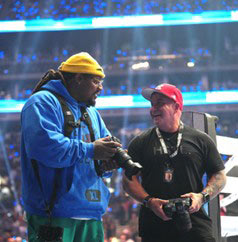
I think you and I could talk for another couple of hours, any good Jersey Boys could. I really appreciate you taking the time, we really appreciate it, and thank you so much.
Thanks for having me, man, I really appreciate it.
Interview conducted by Jordan Cohen (SAS’18) with editing by Celine LaBelle (SEBS’20)