- 848.932.7474
- info@rutgersalumni.org
by Marty Siederer LC ‘77
When the Rutgers Oral History Archives (ROHA) was founded in 1994, its original goal was to document the life experiences of the Rutgers College graduating class of 1942, who represented a broad swath of New Jersey residents and life experiences: first- and second-generation immigrant upbringings, the Great Depression, World War II and beyond. Today, it is a growing resource of first-person historical accounts from a broader range of constituents.
Bart Klion RC ‘48 is a past president of ROHA and remains a member of the executive committee of the Rutgers Living History Society, which supports the Rutgers Oral History Archives. Klion’s brother, Stan RC ‘42 who died when he was 70, along with Ralph Schmidt RC ‘42 were the founders of ROHA, with Tom Kindre RC ‘42 being one of the main driving forces. Bart Klion recalled that “the 1940s graduating classes grew up from immigrant families during the Roaring Twenties and the Great Depression and most served in World War II or were part of the Rutgers ROTC program. They were the first in their families to attend college. Quite a unique mix of students from so many walks of life.”
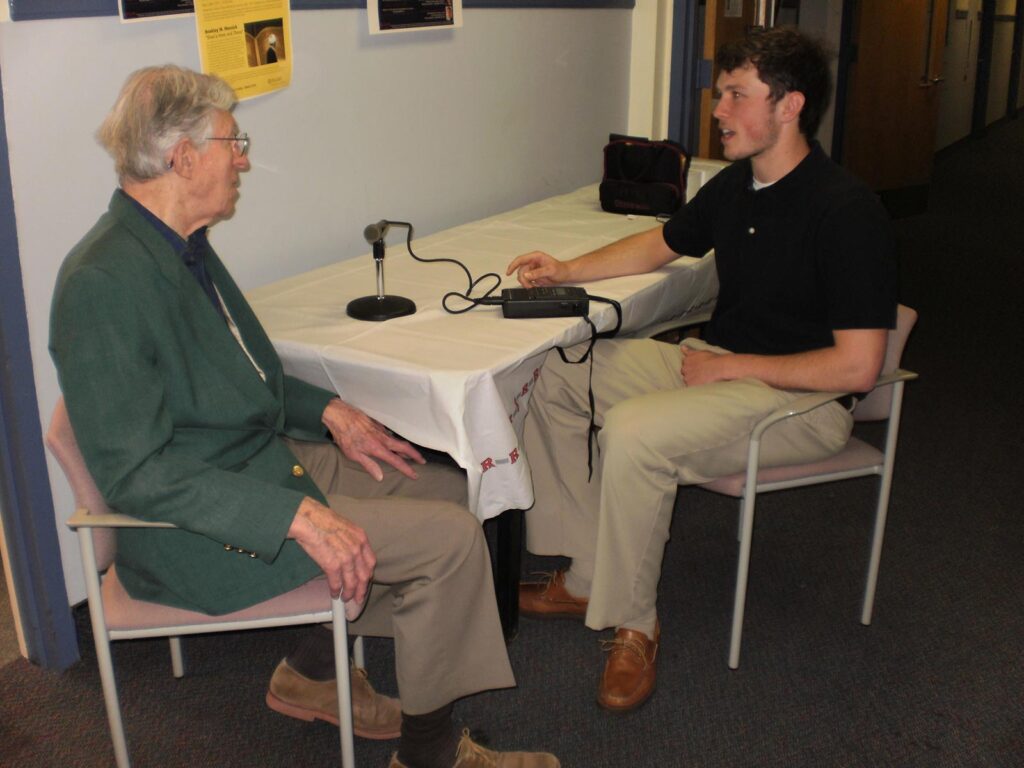
Kindre, who served as the class correspondent for fellow 1942 graduates, and Steven Ambrose, an adjunct professor in the Rutgers history department invited students who graduated in 1942 to submit written stories about their life experiences, as part of plans to celebrate the class’ 50-year reunion. When very few responded, alumni were provided with the option to be interviewed, with the recordings made available on audio tapes and written transcripts. That was the start of ROHA, which soon expanded its interviews to include veterans of the Korean and Vietnam wars. Kindre’s involvement had an enormous influence on Bart Klion’s involvement with the Rutgers Living History Society.
ROHA soon expanded its oral history interviews to students, alumni, faculty and staff at Rutgers, opened its doors to all affiliated with Rutgers University, then to all New Jersey residents, according to ROHA Director Shaun Illingworth, RC ’01 MLIS ’04, who joined ROHA in 2004. In recent years, ROHA has significantly expanded its scope of interviews to include groups that were underserved in the past, such as women, African-Americans, Korean-Americans, Latino/a, LGBTQ+, women, and others–within the Rutgers, NJ and veteran populations. ROHA has also launched partnership initiatives to document new populations and events, most notably the COVID-19 Pandemic and its impact on NJ. The typical interview takes around two hours, according to Illingworth, and can be done in person at Rutgers or at a mutually convenient location, or over Zoom. Illingworth and ROHA Associate Director Jeongeun Park would like to further expand the organization’s archived interviews but face challenges in terms of limited staff and funding.
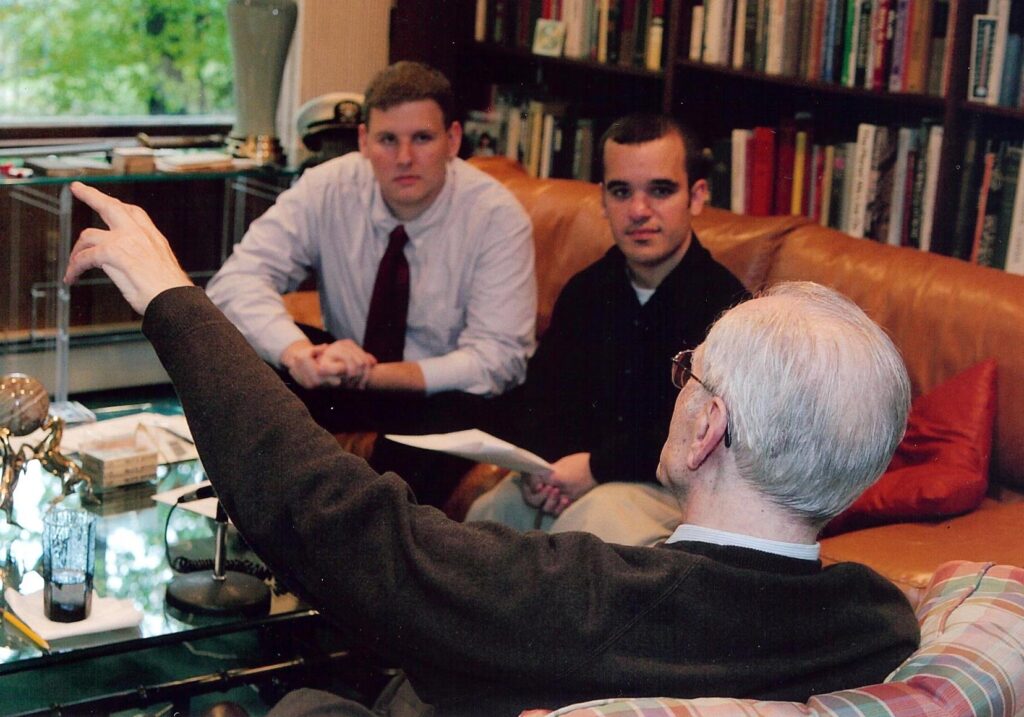
Bill Fernekes RC ‘74, Chair of the Rutgers Living History Society, has been interviewed twice by ROHA and shared memories about going to Rutgers during the Vietnam War and when Rutgers College went coeducational. “In 1972, I met my wife Sheila, a member of the first class of women accepted into Rutgers College, who I married, so we have a unique Rutgers story. There are so many more Rutgers stories we don’t know about and would like to add to ROHA’s archives,” said Fernekes. The Rutgers Living History Society recently became a Special Interest Group of the RAA. “Our affiliation with the RAA will expand our outreach to young alumni who are interested in history and sharing their Rutgers and personal stories for future generations.” ROHA is planning to add podcasts and explore ways to make its vast library of interviews available in formats that are commonly used by a broader generation of audiences. Plans are also in the works to commemorate the 50th anniversary of Crossroads Theatre and the Mason Gross School of the Arts through interviews with key figures from both institutions using ROHA’s platforms.
Kathryn Rizzi RC ‘02, former associate director of ROHA, recalled the organization’s early days when it was located in the attic of Bishop House on the College Avenue Campus. (ROHA moved their operations to Spring Street in downtown New Brunswick in 2018.) “The technology that ROHA uses to capture oral histories has advanced so much. The Covid pandemic allowed us to reach more interviewees through Zoom, and use that resource in addition to audio recordings and written transcripts.” Rizzi sees ROHA as a great resource for students interested in studying history. “Internships with ROHA are a terrific opportunity for students interested in exploring history-related careers.”
A major event that raises awareness of ROHA is the Stephen E. Ambrose Oral History Award, which is presented annually by the Rutgers Living History Society to individuals who have made an outstanding contribution to the practice and/or use of oral history. The award is named for the late historian and author who led ROHA at its inception in 1994 and served on its Academic Advisory Board for the balance of his life. Tom Frusciano, the Rutgers University Archivist Emeritus, noted that the Ambrose Award received heightened attention when former NBC News anchor Tom Brokaw was the first honoree in 2005. The 2026 Ambrose honoree will be Viet Thanh Nguyen, the 2015 Pulitzer Prize-winning author of “The Sympathizer.” The event will take place on May 2, 2026 at 11 am at the College Avenue Student Center.
For more information about the Rutgers Oral History Archives and to find out how you can share your story, visit https://oralhistory.rutgers.edu/