- 848.932.7474
- info@rutgersalumni.org
by Marty Siederer LC ‘77

The lower level of the College Avenue Student Center on the Rutgers New Brunswick Campus has been home to a number of favorite student hang-outs, including a bowling alley and the Red Lion Cafe. This past February marked the opening of a new resource in the lower level of the student center: The Rutgers Basic Needs Center, which in just a few months has become a vital lifeline for New Brunswick-Piscataway campus students.
The Basic Needs Center came about as an outgrowth of the Rutgers Student Food Pantry, which was established in 2016 and located on Union Street, with a mobile pantry that was added during the Covid pandemic. The new center provides services beyond food, including housing, clothing, childcare, mental health, financial resources and transportation, according to Rutgers Assistant Dean for Basic Student Needs, Phillip Smith. “The establishment of the Basic Needs Center marks a significant milestone and ongoing efforts to ensure that every student at Rutgers has access to essential resources they need to thrive academically and personally,” Smith said at the center’s ribbon cutting ceremonies on February 18, 2025.
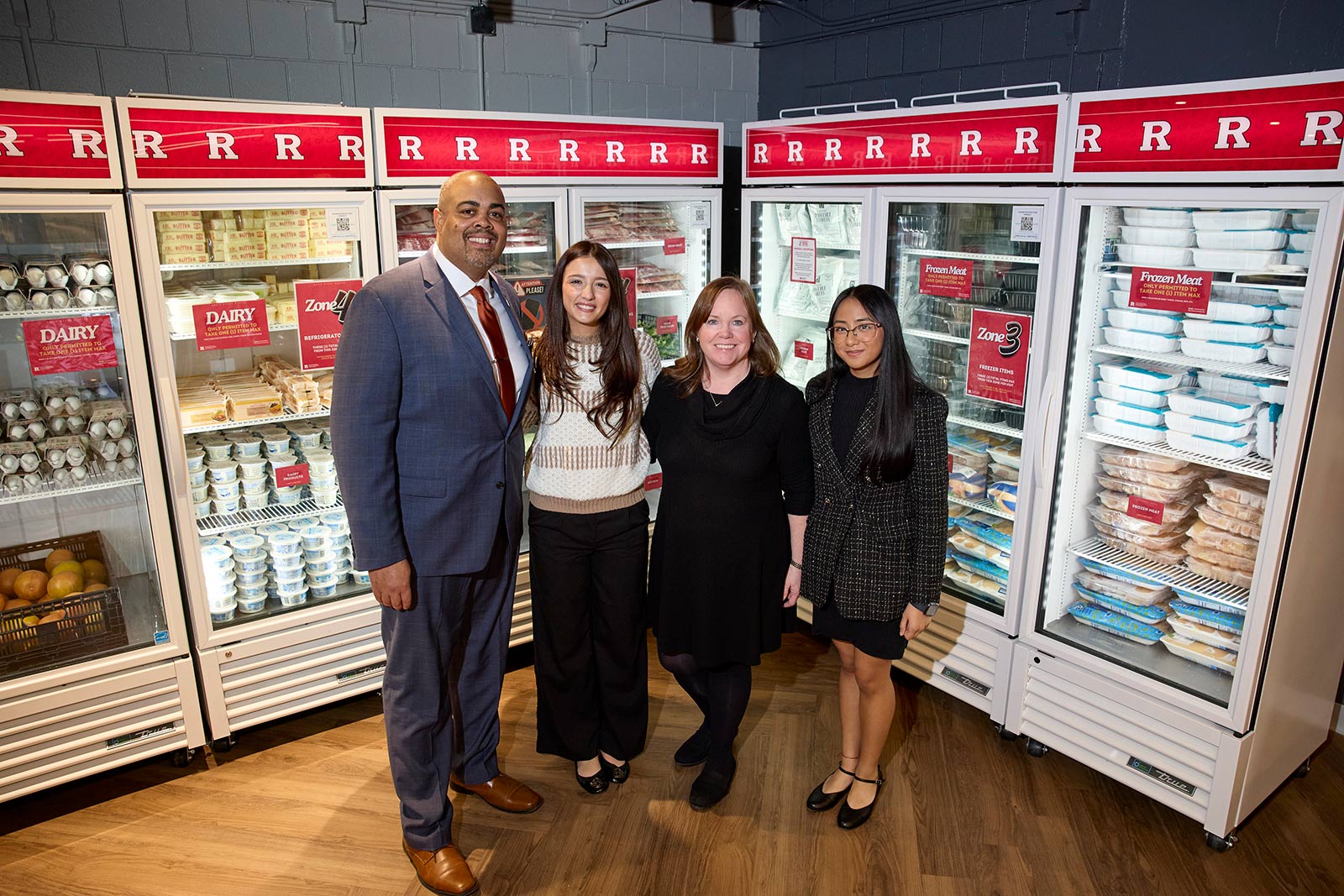
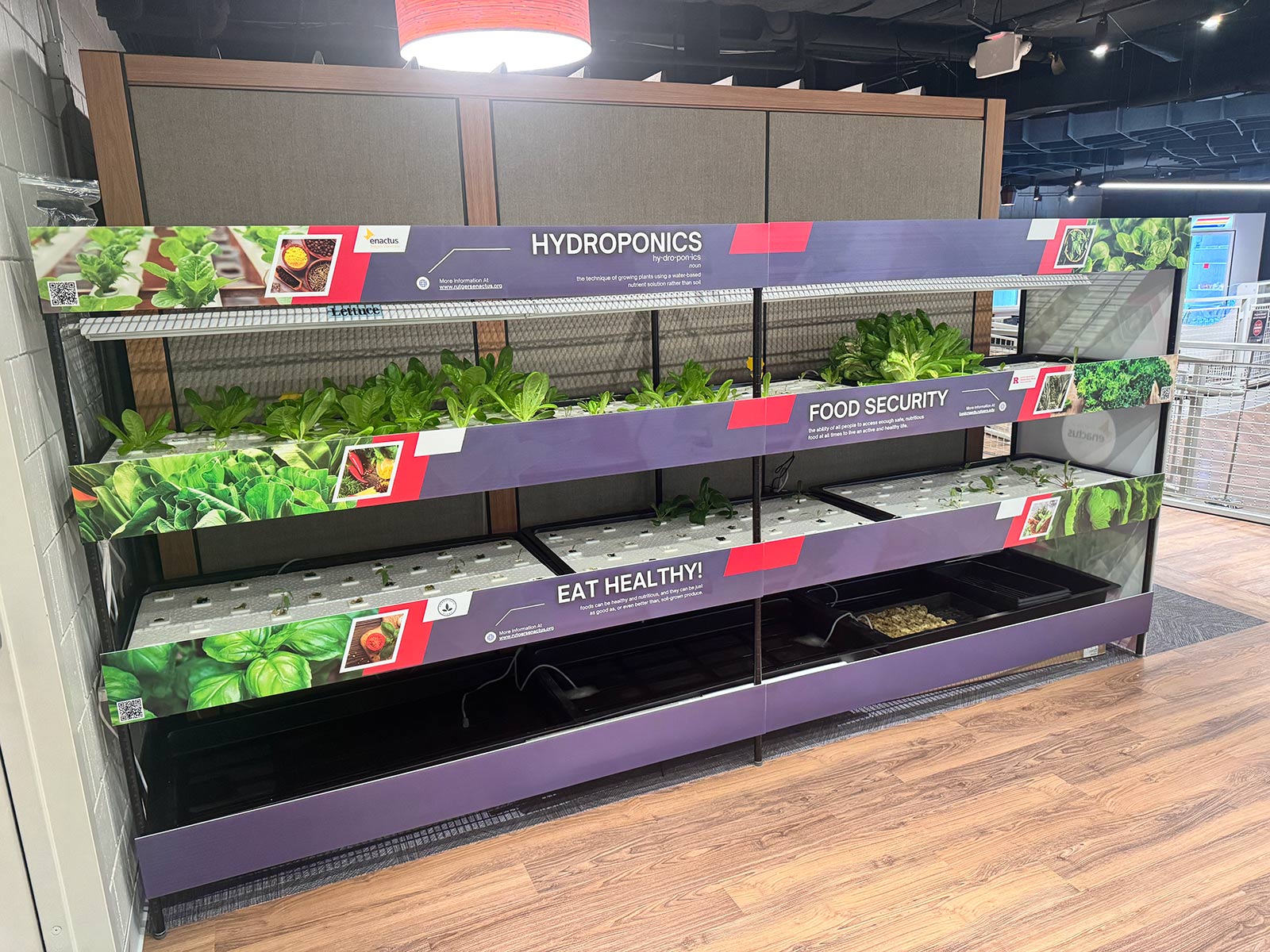
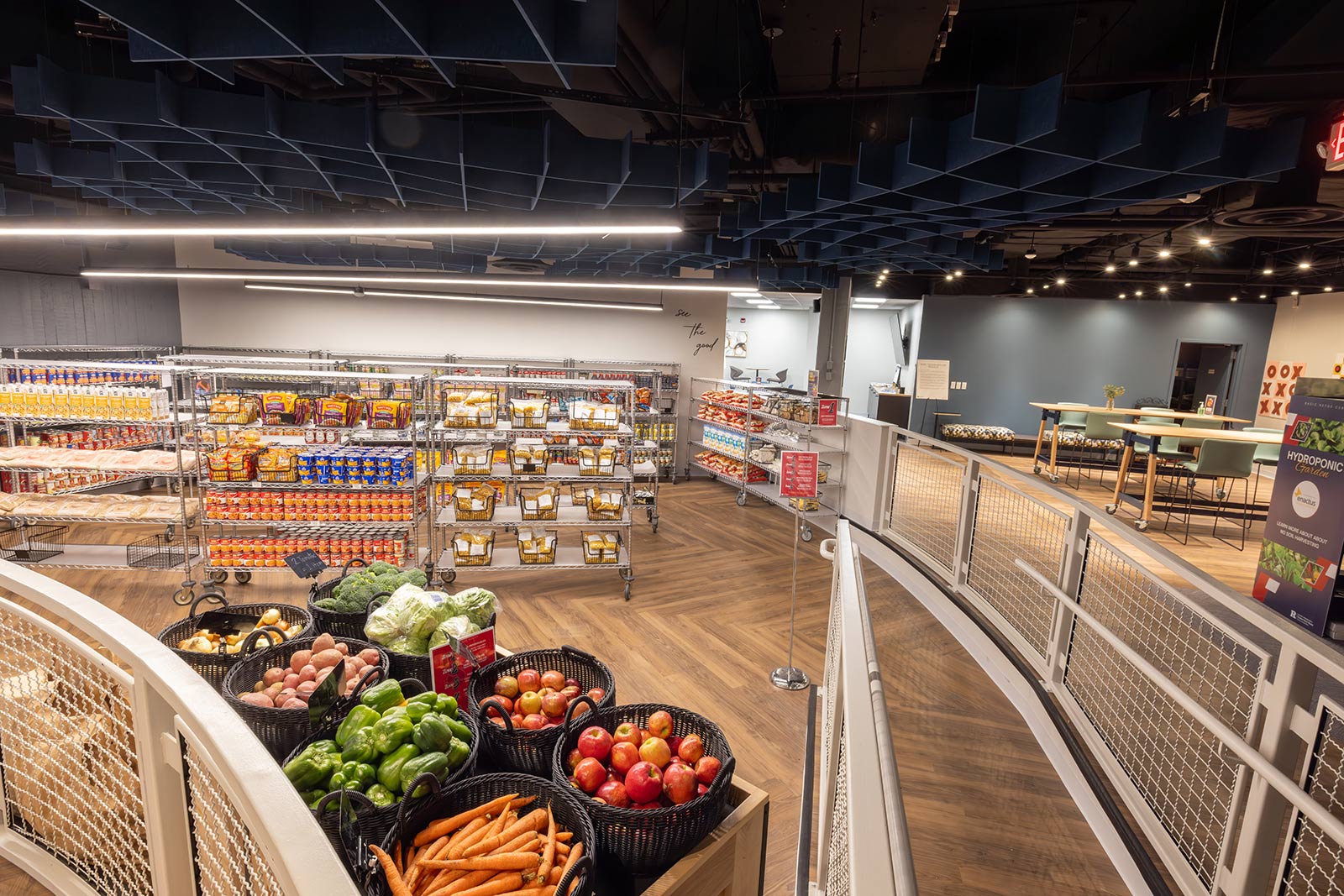
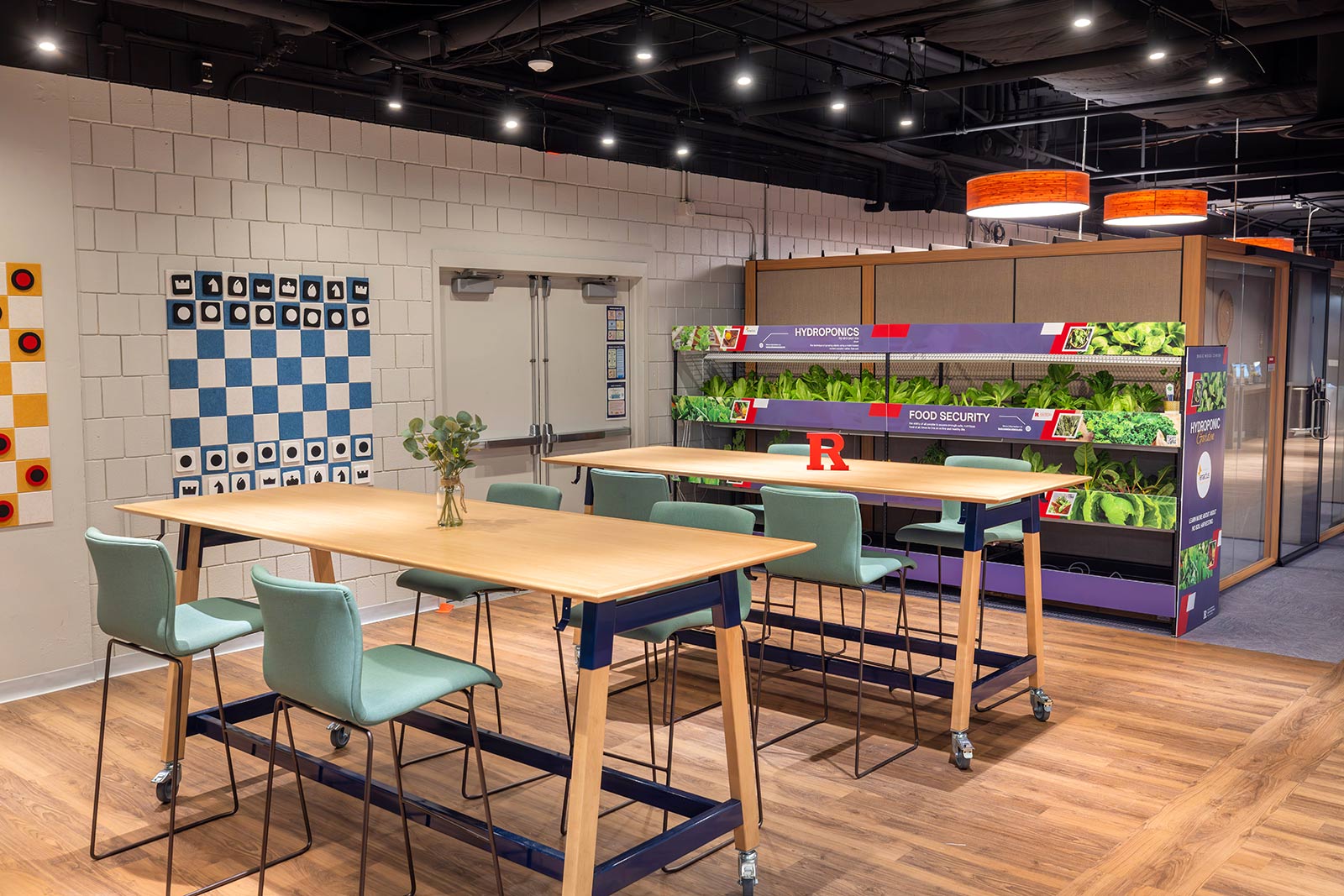
The Basic Needs Center has an open, welcoming reception area and offers a range of student resources, including: refrigerator units similar to those found in a supermarket for students to access donated frozen and perishable food, an indoor hydroponic garden to grow fresh vegetables, a clothing alcove for students needing apparel, private offices for students to meet with staff to identify on- and off-campus community resources above what the Center can provide, and a comfortable lounge and study space. The Basic Needs Center in New Brunswick and food pantries on the Camden and Newark campuses have an extensive databank of community services accessible through partnerships with Single Stop and community organizations throughout the campus areas.
As Smith puts it, “The New Brunswick Basic Needs Center is more than a safety net,”. “Instead of a patchwork of services, students who are facing challenges can access a network of support resources at one central location. The Center is the heart of a vital support system and a safe place where students feel valued and supported. A need for emergency aid, housing, food, transportation, childcare, mental and physical wellness, technology services and access to textbooks should not threaten a student’s dream of earning a college degree.”
The Basic Needs Center is modeled after similar resources at colleges located on the West Coast,” Smith said. “We go beyond what food banks can provide. Helping students with basic needs has been shown to improve retention and graduation rates.”
Over 500 students visited the Basic Needs Center in the first two weeks of the mid-February opening, with 1,500 students visiting the Center in March, according to Smith. The Center is open throughout the school year, with reduced hours during semester breaks. In addition, the Knights Pantry, a QR code-accessible food box for students, is available in the Student Center until midnight during the school year, even when the Basic Needs Center is not open.
The Basic Needs Center may be just scratching the surface of helping students: A survey conducted in December 2022 showed that almost one-third of Rutgers students have experienced food insecurity, and more than 7 percent had been homeless at one point within the past year.”
One student, Jodie Foss Ramos shared her story at the Basic Needs Center ribbon cutting. A junior nursing major and cadet in the Rutgers Air Force ROTC program, Ramos funded her entire education and faced significant challenges at the start of the Spring 2024 semester. Unable to afford a meal plan and ineligible for food stamps, Ramos said, “I found myself skipping meals, which left me physically drained and mentally exhausted. Fatigue became a constant battle,” Ramos said. “Without proper nutrition, I struggled to maintain the energy I needed to succeed. My focus began to fade, and it became increasingly difficult to keep up.”
Ramos said her discovery of the Rutgers–New Brunswick Food Pantry, the predecessor of the newly opened Rutgers Basic Needs Center, turned her semester around. “It changed everything for me. Being able to visit once a week gave me the relief I needed to regain some balance. It made the world of a difference in helping me push through one of the most difficult times in my life.”
For Associate Dean Kerri Willson, the opening of the Basic Needs Center was one of the best days of her professional career. “When we opened our food pantry in 2016 and met students who needed help getting their basic needs met, the idea of a comprehensive one-stop shop to address these needs was a dream that seemed unreachable. Thanks to the advocacy of the Rutgers University Foundation’s leadership and New Brunswick Chancellor Francine Conway’s, prioritization of student well-being, this unattainable dream became a reality. For students having challenges in their time at Rutgers, the Basic Needs Center can help them get to the finish line.”
According to Rutgers New Brunswick Chancellor, Francine Conway, “We know that an excellent university must address its students’ basic needs. When students don’t have to worry about affording their next meal, textbooks, or housing, they are free to focus on their academic journeys and reach their highest goals. Basic needs insecurity is not a Rutgers problem or a New Jersey problem; it affects nearly 30 percent of college students nationwide.”
“Rutgers–New Brunswick has been setting an example in how to meet this need for quite some time with resources like our Student Food Pantry, emergency funding, the No More Hungry Knights meal plan scholarship, and a partnership with the New Brunswick Community Farmers Market. The Basic Needs Center brings these student supports to the next level and under one roof with centralized services, increased accessibility, comprehensive support, and a welcoming community environment,” said Conway.
The Basic Needs Center relies on donor support and funding from the university, along with external resources. Brian Reilly (ENG ‘80) and his wife Stacey Reilly (DC ‘80) are among the major donors who made the Center a reality. “There are many things that can become obstacles to a successful academic experience,” said Stacey. “This center, with its resources focused on helping our students deal with those obstacles in a thoughtful and dignified manner, is one way we can better ensure the success of our students and allow them to focus on their education.”
While the Center received funding to open its doors, continued donations are needed to ensure that the needs of students are being met. “More families are experiencing food insecurity, which puts more pressure on local food banks. “We use funds to purchase items that we can’t get donated to ensure that students have uninterrupted access to nutritious food,” Smith said. “We can always use donations of gently-used clothing, including Rutgers apparel and business attire, and maternity clothing.”
Helping students with basic needs is a university-wide initiative at Rutgers. In addition to the New Brunswick programs, both the Camden and Newark campuses provide an array of programs and services to support students facing food insecurity.
Hend El-Buri, former Director of Nutrition and Pantry for the pantry+ program at Rutgers-Newark, cited a survey in 2022 that reported 47 percent of undergraduate students attending the Newark campus experienced food insecurity, with 31 percent experiencing housing insecurity. The Rutgers-Newark program includes:
Students and faculty ambassadors help spread the word about pantry+ and Single Stop, and get students connected to food and basic needs resources while maintaining the dignity of students in need. The Rutgers Health Food Pantry mitigates food insecurity across Rutgers Health students, faculty, and staff. They proudly implemented a new online ordering system to improve access. Volunteers and donations are welcome. You can support pantry+ programs by visiting https://give.rutgersfoundation.org/pantryrun/19630.html or emailing pantry_run@newark.rutgers.ed
According to Talia Smith, the program coordinator for Scarlet Raptor’s Nest, the food pantry for the Camden campus, started in a break room and moved to a larger location in the campus’ Wellness Center in 2023 to accommodate the expanded requests for help. Students can drop in two times a week to obtain food or place an online order for pickup. Over 2,500 students visited the Scarlet Raptor’s Nest during the 2024-2025 school year, with over 30,000 pounds of food and over 25,000 meals provided by area food banks and companies. A large portion of the students impacted by food insecurity live off campus and are from overseas. The issues for Camden students are further exacerbated by the city’s challenges as a food desert, with very few choices outside of bodegas and convenience stores to get fresh produce. “Students in need of fresh produce often have to take the bus or train to a supermarket in South Jersey or even across the river to Philadelphia,” Smith said. The Camden campus Wellness Center is also staffed by two social workers, who use Single Stop to connect students on the Camden campus to additional community resources.
“There’s extensive research showing how diet impacts brain health, focus, and academic performance,” Smith said. “Many Rutgers–Camden students – especially those from marginalized backgrounds or international students – are juggling student loans, housing costs, and food insecurity all at once. Without access to healthy food, students who are already disadvantaged can fall even further behind. The pantry helps close the gap in basic needs access, allowing students to focus on learning instead of survival. It is resources like this that remind students they’re part of a community that cares and wants them to thrive.”